Wenbin Lin, Ph.D.
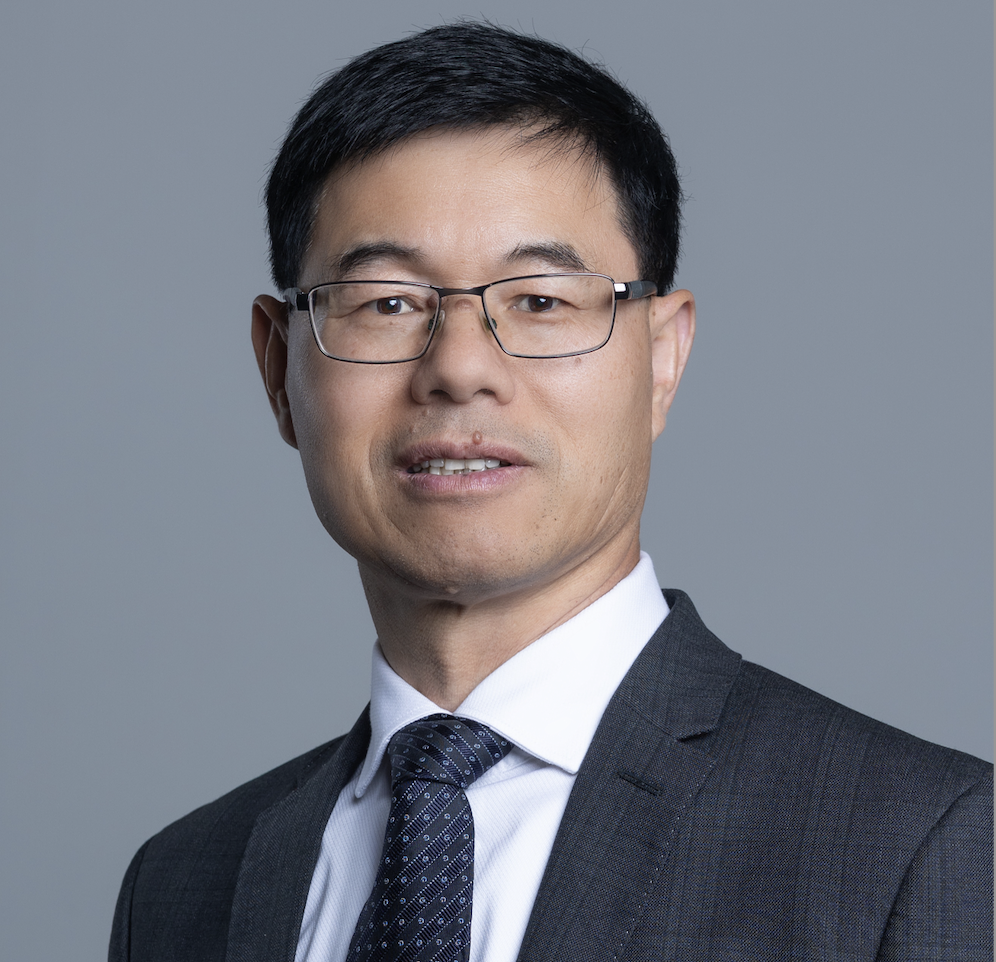
Wenbin Lin Ph.D.
Laboratory of Molecular Materials for Sustainability and Human Health
E-mail: linwenbin@westlake.edu.cn
Biography
Wenbin Lin is an internationally renowned materials chemist and chemical biologist, widely recognized as one of the pioneers and leaders in the field of metal–organic frameworks (MOFs). He is currently Chair Professor in the School of Science at Westlake University, with joint appointments in the Schools of Medicine and Engineering at Westlake University.
Professor Lin received his B.S. degree from the University of Science and Technology of China in 1988 and his Ph.D. from the University of Illinois at Urbana–Champaign in 1994 under the supervision of Professors Ralph G. Nuzzo and Gregory S. Girolami. He then conducted postdoctoral research as a National Science Foundation (NSF) Postdoctoral Fellow with Professor Tobin J. Marks at Northwestern University.
From 1997 to 2001, Professor Lin was Assistant Professor of Chemistry at Brandeis University. He subsequently joined the University of North Carolina at Chapel Hill, where he rose through the academic ranks from Assistant Professor (2001–2003) and Associate Professor (2003–2007) to Professor (2007–2011) and Kenan Distinguished Professor of Chemistry and Pharmacy (2011–2013). In 2013, he joined the University of Chicago as the James Franck Professor of Chemistry and of Radiation and Cellular Oncology. Professor Lin joined Westlake University in 2025, where he continues to advance scientific discovery and mentor the next generation of researchers.
Research
Professor Wenbin Lin's research focuses on the design and development of molecular materials to tackle pressing challenges in sustainability and human health. In 1997, his laboratory established rational strategies for constructing noncentrosymmetric solids based on MOFs, providing one of the earliest blueprints for the systematic design of functional MOF materials. Building on this foundation, the Lin lab pioneered the field of MOF catalysis, developing MOF-based catalysts for a wide spectrum of transformations, including asymmetric catalysis, solar energy conversion, Earth-abundant metal catalysis, photoredox catalysis, and synergistic and biomimetic catalysis.
In parallel, Professor Lin's group invented nanoscale MOFs for biomedical applications by ingeniously integrating coordination chemistry, nanotechnology, and medicine. These efforts have led to breakthroughs in biological and biomedical imaging as well as cancer therapy, encompassing chemo-, photodynamic, radiodynamic, sonodynamic, and immunotherapeutic modalities. Five of these innovative nanomaterials have advanced from academic discovery to clinical evaluation, underscoring their translational potential and real-world impact.
Professor Lin has published more than 477 peer-reviewed papers, which have collectively garnered over 87,000 citations, and he has been consistently listed among the world's most highly cited chemists since 2014. He was also recognized as one of the top ten chemists worldwide during the decade 1999–2009, based on per-article citation impact. Beyond academia, Professor Lin is the founder of two clinical-stage biopharmaceutical companies and has received numerous professional honors for his pioneering contributions to functional molecular materials. He is an elected Fellow of the American Association for the Advancement of Science (2011), the European Academy of Sciences (2023), the National Academy of Inventors (2024), and the American Institute for Medical and Biological Engineering (2025).
Representative Publications
1. Zhou, Z.; Wang, D.; Wang, Z.; Deng, C.; Lin, W. Hyperporphyrinization-Enhanced Electron Transfer in Covalent Organic Frameworks for Metal-Free Photocatalytic C-H Functionalization. J. Am. Chem. Soc. 2025, 147, 36071-36078.
2. Zhou, Z.; Wang, Z.; Blenko, A.L.; Li, J.; Lin, W. Viologen Covalent Organic Framework Mediates Near-Infrared Light-Induced Electron Transfer for Catalytic Oxidative Coupling Reactions. J. Am. Chem. Soc. 2025, 147, 10846-1085.
3. Jiang, X.; Lin, W. Innate Immune Activation with Multifunctional Nanoparticles for Cancer Immunotherapy. Angew. Chem. Int. Ed. 2025, 64, e202423280.
4. Ma, X.; Jiang, X.; Wang, Z.; Fan, F.; Li, J.; Chow, C.; Wang, C.; Deng, C.; Lin, W. Cationic Metal-Organic Layer Delivers siRNAs to Overcome Radioresistance and Potentiate Cancer Radiotherapy. Angew. Chem. Int. Ed. 2025, 64, e202419409.
5. Wang, C.; Li, J.; Jiang, X.; Ma, X.; Zhen, W.; Tillman, L.; Weichselbaum, R.R.; Lin, W. Bifunctional Metal-Organic Framework Synergistically Enhances Radiotherapy and Activates STING for Potent Cancer Radio-Immunotherapy. Angew. Chem. Int. Ed. 2025, 64, e202417027.
6. Zhen, W.; Fan, Y.; Germanas, T.; Tillman, L.; Li, J.; Blenko, A.; Weichselbaum, R.R.; Lin, W. Digitonin-Loaded Nanoscale Metal-Organic Framework Induces Antitumor Immunity via Mitochondria-Targeted Radiotherapy-Radiodynamic Therapy and Disulfidptosis. Adv. Mater. 2025, 2405494.
7. Zhen, W.; Xu, Z.; Mao, Y.; McCleary, C.; Jiang, X.; Weichselbaum, R.R.; Lin, W. Nanoscale Mixed-ligand Metal-Organic Framework for X-ray Stimulated Cancer Therapy. J. Am. Chem. Soc. 2024, 146, 33149-33158.
8. Zhen, W.; Germanas, T.; Weichselbaum, R.R.; Lin, W. Multifunctional Nanomaterials Mediate Cholesterol Depletion for Cancer Treatment. Angew. Chem. Int. Ed. 2024, 136, e202412844.
9. Lin, G.; Tillman, L.; Luo, T.; Jiang, X.; Fan, Y.; Liu, G.; Lin, W. Nanoscale Metal-Organic Layer Reprograms Cellular Metabolism to Enhance Photodynamic Therapy and Antitumor Immunity. Angew. Chem. Int. Ed. 2024, 63, e202410241.
10. Guo, Q.-Y.; Wang, Z.; Fan, Y.; Zheng, H.; Lin, W. A Stable Site-Isolated Mono(phosphine)-Rhodium Catalyst on a Metal-Organic Layer for Highly Efficient Hydrogenation Reactions. Angew. Chem. Int. Ed. 2024, 63, e202409387.
11. Zhen, W.; Kang, D. W.; Fan, Y.; Wang, Z.; Germanas, T.; Nash, G.; Shen, Q.; Leech, R.; Li, J.; Engel, G.; Weichselbaum, R.R.; Lin, W. Simultaneous Protonation and Metalation of a Porphyrin Covalent Organic Framework Enhance Photodynamic Therapy. J. Am. Chem. Soc. 2024, 146, 16609-16618.
12. Jiang, X.; Luo, T.; Yang, K.; Lee, M.J.; Liu, J.; Tillman, L; Zhen, W.; Weichselbaum, R.R.; Lin, W. STING activation disrupts tumor vasculature to overcome the EPR limitation and increase drug deposition. Sci. Adv. 2024, 10, eado0082.
13. Luo, T.; Jiang, X.; Fan, Y.; Yuan, E.; Li, J.; Tillman, L.; Lin, W. STING agonist-conjugated metal-organic framework induces artificial leukocytoid structures and immune hotspots for systemic antitumor responses. Nat. Sci. Rev. 2024, 11, nwae167.
14. Fan, Y.; Blenko, A.L.; Labalme, S.; Lin, W. “Metal-Organic Layers with Photosensitizer and Pyridine Pairs Activate Alkyl Halides for Photocatalytic Heck-type Coupling with Olefins. J. Am. Chem. Soc. 2024, 146, 7936-7941.
15. Luo, T.; Jiang, X.; Li, J.; Nash, G.T.; Yuan, E.; Albano, L.; Tillman, L.; Lin, W. Phosphate Coordination to Metal-Organic Layer Secondary Building Units Prolongs Drug Retention for Synergistic Chemoradiotherapy. Angew. Chem. Int. Ed. 2024, 63, e202319981.
16. Fan, Y.; Kang, D.W.; Labalme, S.; Lin, W. A Spirobifluorene-based Covalent Organic Framework for Dual Photoredox and Nickel Catalysis. J. Am. Chem. Soc., 2023, 145, 25074-25079.
17. Guo, Q.-Y.; Wang, Z.; Feng, X.; Fan, Y.; Lin, W. Generation and Stabilization of A Dinickel Catalyst in A Metal-Organic Framework for Selective Hydrogenation Reactions. Angew. Chem. Int. Ed. 2023, 62, e202306905.
18. Xu, Z.; Zhen, W.; McCleary, C.; Luo, T.; Jiang, X.; Peng, C.; Weichselbaum, R.R.; Lin, W. Nanoscale Metal-Organic Frameworks with an X-ray Triggerable Prodrug for Synergistic Radiotherapy and Chemotherapy. J. Am. Chem. Soc. 2023, 145, 18698-18704.
19. Zheng, H.; Fan, Y.; Lin, W. Sequential Modifications of Metal-Organic Layer Nodes for Highly Efficient Photocatalyzed Hydrogen Atom Transfer. J. Am. Chem. Soc. 2023, 145, 9994-1000.
20. Wang, Z.; Yeary, P.; Feng, X.; Lin, W. Self-Adaptive Metal-Organic Framework Assembles Diiron Active Sites to Mimic Monooxygenases. J. Am. Chem. Soc. 2023, 145, 8647-8655.
21. Luo, T.; Fan, Y.; Mao, J.; Jiang, X.; Albano, L.; Yuan, E.; Germanas, T.; Lin, W. Metal-Organic Layer Delivers 5-Aminolevulinic Acid and Porphyrin for Dual-Organelle-Targeted Photodynamic Therapy. Angew. Chem. Int. Ed. 2023, 62, e202301910.
22. Lin, G.; Nash, G.T.; Luo, T.; Ghosh, I.; Sohoni, S.; Christofferson, A.J.; Liu, G.; Engel, G.S., Lin, W. Two-Dimensional Nanosonosensitizers Facilitate Energy Transfer to Enhance Sonodynamic Therapy. Adv. Mater. 2023, 35, e2212069.
23. Fan, Y.; Zheng, H.; Labalme, S.; Lin, W. Molecular Engineering of Metal-Organic Layers for Sustainable Tandem and Synergistic Photocatalysis. J. Am. Chem. Soc. 2023, 145, 4158-4165.
24. Fan, Y.; Kang, D. W.; Labalme, S.; Li, J.; Lin, W. Enhanced Energy Transfer in A p-Conjugated Covalent Organic Framework Facilitates Excited-State Nickel Catalysis. Angew. Chem. Int. Ed. 2023, 62, e202218908.
25. Zhen, W.; Weichselbaum, R.R.; Lin, W. Nanoparticle-Mediated Radiotherapy Remodels the Tumor Microenvironment to Enhance Antitumor Efficacy. Adv. Mater. 2023, 35, 2206370.
26. Xu, Z.; Luo, T.; Mao, J.; McCleary, C.; Yuan, E.; Lin, W. Monte Carlo Simulation-Guided Design of a Thorium-Based Metal-Organic Framework for Efficient Radiotherapy-Radiodynamic Therapy. Angew. Chem. Int. Ed. 2022, 61, e220208685.
27. Lan, G.; Fan, Y.; Shi, W.; You, E.; Veroneau, S.S.; Lin, W. Biomimetic active sties on monolayered metal-organic frameworks for artificial photosynthesis. Nat. Catal. 2022, 5, 1006-1018.
28. Yang, K.; Han, W.; Jiang, X.; Piffko, A.; Bugno, J.; Han, C.; Li, S.; Liang, H.; Xu, Z.; Zheng, W.; Wang, L.; Wang, J.; Huang, X.; Ting, J.P.Y.; Fu, X.-Y.; Lin, W.; Weichselbaum, R.R. Zinc-c-di-AMP nanoparticles target and suppress tumors via endothelial STING activation and tumor associated macrophage reinvigoration. Nat. Nanotech. 2022, 17, 1322-1331.
29. “Two-Dimensional Nanoradiosensitizer Enhances Radiotherapy and Delivers STING Agonists to Potentiate Cancer Immunotherapy.” Luo, T.; Nash, G.T.; Jiang, X.; Feng, X.; Mao, J.; Liu, J.; Juloori, A.; Pearson, A.T.; Lin, W. Adv. Mater. 2022, e2110588.
30. “Site Isolation in Metal-Organic Layers Enhances Photoredox Gold Catalysis.” Zheng, H.; Fan, Y.; Song, Y.; Chen, J.S.; You, E.; Labalme, S.; Lin, W. J. Am. Chem. Soc. 2022, 144, 10694-10699.
31. “Direct photo-oxidation of methane to methanol over a mono-iron-hydroxyl site.” An, B.; Li, Z.; Wang, Z.; Zeng, X.; Han, X.; Cheng, Y.; Sheveleva, A.M.; Zhang, Z.; Tuna, F.; McInnes, E.J.L.; Frogley, M.D.; Ramirez-Cuesta, A.J.; Natrajan, L.; Wang, C.; Lin, W.; Yang, S.; Schröder, M. Nat. Mater. 2022, 21, 932-938.
32. “Dimensional Reduction Enhances Photodynamic Therapy of Metal-Organic Nanophotosensitizers.” Luo, T.; Fan, Y.; Mao, J.; Yuan, E.; You, E.; Xu, Z.; Lin, W. J. Am. Chem. Soc. 2022, 144, 5241- 5246.
33. “Synergistic checkpoint-blockade and radiotherapy–radiodynamic therapy via an immunomodulatory nanoscale metal–organic framework.” Ni, K.; Xu, Z.; Culbert, A.; Luo, T.; Guo, N.; Yang, K.; Pearson, E.; Preusser, B.; Wu, T.; La Riviere, P.; Weichselbaum, R.R.; Spiotto, M.T.; Lin, W. Nat. Biomed. Eng. 2022, 6, 144-156.